Slope engineering in Bristol is a critical discipline that addresses the stability of natural and man-made inclines across a city defined by its dramatic topography. From the steep limestone faces of the Avon Gorge to the overconsolidated clay slopes of the suburbs, this category encompasses the assessment, design, and remediation of land susceptible to movement. Effective slope management protects residential properties, major transport corridors like the A4 Portway, and vital infrastructure such as the Floating Harbour retaining walls. Given Bristol's dense urban fabric and its setting within a river valley system, slope failures can have immediate and severe consequences for public safety, property value, and the city’s economic continuity.
Bristol's underlying geology is the primary driver of its slope stability challenges, dominated by the interbedded limestones and mudstones of the Carboniferous period, alongside extensive Triassic Mercia Mudstone and the distinctive Dundry Hill oolite. The area’s Quaternary history is equally important, having left a legacy of head deposits, solifluction sheets, and landslip debris that mantle many valley sides. These superficial materials, often comprising stiff, fissured clays with sand and gravel lenses, are particularly prone to reactivation following prolonged rainfall. Groundwater conditions are complex, with perched water tables in the more permeable limestone creating artesian pressures that can destabilise overlying clay strata, a common factor in failures across districts like Clifton and Totterdown.
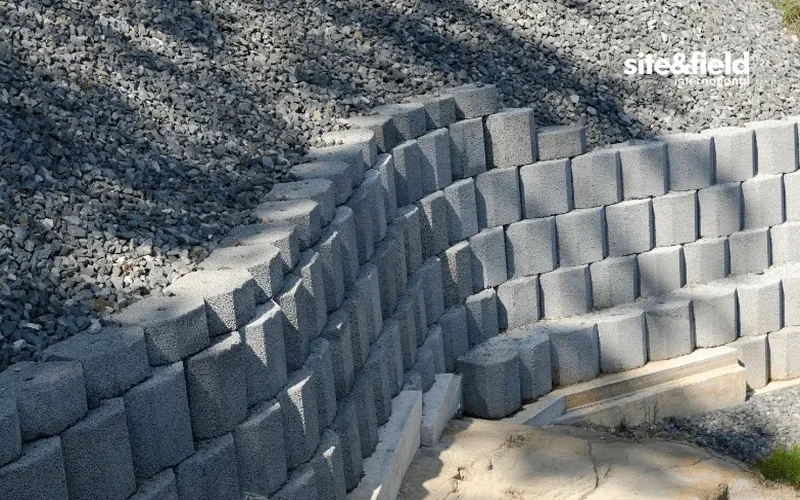
All slope works in Bristol must comply with the national framework of Eurocode 7 (BS EN 1997-1 and -2) for geotechnical design, alongside the UK National Annex which provides country-specific parameters. The British Standard BS 8006-1 governs reinforced soil structures, while BS 8081 provides specific guidance for ground anchor design. For projects on or near the rail network, Network Rail standards such as NR/L3/CIV/003 are mandatory. Crucially, planning conditions from Bristol City Council often mandate a Coal Mining Risk Assessment given the Bristol coalfield’s extent, and the council’s Local Plan policies, including BCS9 on Green Infrastructure, can influence slope remediation strategies. The Construction (Design and Management) Regulations 2015 also place duties on designers to eliminate foreseeable risks, including slope instability.
This category of work is required for a broad spectrum of projects, from emergency stabilisation of a garden-threatening landslip in a Victorian terrace to enabling major infrastructure schemes. Transport projects, including the maintenance of the Clifton Suspension Bridge approaches and railway cuttings, demand rigorous active and passive anchor design to secure rock faces and retain failing soil masses. Residential developments on Bristol’s characteristic hillsides routinely require retaining structures exceeding 1.5 metres, triggering the need for formal design checks. Deep excavations for city centre basements, flood defence embankments along the River Avon, and the remediation of historic waste tips all fall within the scope of slope engineering, each presenting unique challenges in ground characterisation and monitoring.
Available services
Common questions
What are the typical signs of slope instability I should look for on my Bristol property?
Key indicators include fresh tension cracks in the ground or paving, tilting or bowing of retaining walls, and doors or windows that begin to stick. Look for bulging at the base of a slope, changes in surface water drainage patterns, and leaning trees or fence posts. In Bristol's clay-rich areas, movement can follow prolonged wet weather, and even minor signs warrant a professional assessment to prevent rapid deterioration.
How does Bristol's geology specifically influence the design of slope remediation works?
Bristol's geology, particularly the stiff fissured Mercia Mudstone and overlying head deposits, dictates a design approach that prioritises groundwater management. The presence of permeable limestone bands can create artesian conditions, demanding deep drainage measures. Anchor design must account for the variable bedrock profile, and residual strength parameters are critical, as these materials have a history of ancient landslips that can be reactivated by excavation or changes in water pressure.
What regulations and approvals are needed for a slope stabilisation project in Bristol?
Design must follow Eurocode 7 and its UK National Annex, with specific methods for ground anchors covered by BS 8081. Planning permission is often required for substantial retaining structures, and a Coal Mining Risk Assessment is a common planning condition in Bristol. If the slope is near a watercourse, an Environmental Permit from the Environment Agency may be needed, and works affecting the public highway require a Section 278 agreement with the council.
What is the difference between an active and a passive anchor in slope stabilisation?
An active anchor is tensioned against the structure immediately after installation, actively applying a load to the retained ground to prevent any movement. A passive anchor is not tensioned; it only generates a resisting force if the ground begins to move and load the tendon. The choice depends on allowable slope deformations, with active anchors preferred in urban Bristol to minimise settlement risks to adjacent buildings and infrastructure.