Underground excavations in Bristol encompass a broad spectrum of engineering activities, from tunnelling for transportation and utilities to the construction of deep basements, shafts, and storage caverns. The importance of this category in Bristol is growing rapidly due to the city's ongoing urban regeneration, the need for enhanced infrastructure like the Bristol Temple Quarter development, and the demand for maximising space in densely built-up areas. Properly planned and executed underground works are critical to avoid ground movement that could compromise the structural integrity of adjacent historic buildings and modern infrastructure alike.
Bristol's local geology presents a complex and challenging environment for any subsurface project. The city is underlain by a variable sequence of Carboniferous and Triassic strata, including the competent but fractured Carboniferous Limestone to the south and west, and the notoriously challenging Triassic Mercia Mudstone Group and Redcliffe Sandstone in the central and northern areas. Superficial deposits, including alluvium and river terrace gravels along the Avon and Frome valleys, add further complexity with high groundwater levels and poor ground conditions. A thorough understanding of this geological mosaic, including potential faulting and karstic features in the limestone, is the absolute foundation of safe underground excavation design.
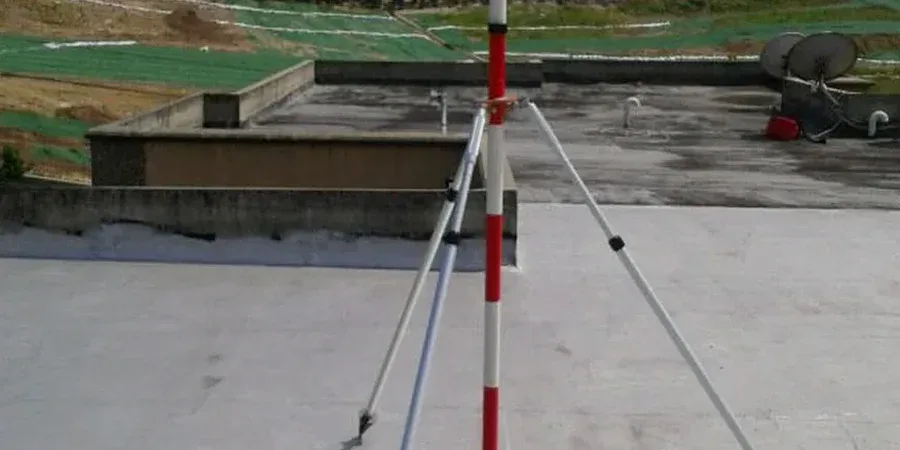
All underground excavation work in the UK, and thus in Bristol, is governed by a strict regulatory framework. The primary legislation is the Health and Safety at Work etc. Act 1974, with specific technical requirements detailed in the Construction (Design and Management) Regulations 2015 (CDM 2015). The cornerstone of technical guidance is BS 6164:2019, which provides a code of practice for health and safety in tunnelling in the construction industry. Additionally, Eurocode 7 (BS EN 1997) governs geotechnical design, requiring rigorous assessment of ground conditions and the selection of appropriate temporary works. Compliance is not optional; it is a legal duty enforced by the Health and Safety Executive (HSE) to manage risks like collapse, water ingress, and exposure to hazardous ground gases.
The types of projects in Bristol that necessitate specialist underground excavation expertise are diverse. Major infrastructure schemes, such as stormwater storage tunnels to alleviate flooding, are a prime example. Commercial developments often require deep excavations for multi-storey basements and foundations, particularly in the city centre. The ongoing expansion of utility networks for power, water, and fibre optics frequently involves trenchless technology like microtunnelling. For all these projects, continuous geotechnical excavation monitoring is not just a recommendation but an integral component of a safe observational method, allowing engineers to validate design assumptions and trigger contingency measures if ground movement exceeds predefined thresholds.
Available services
Common questions
What are the primary risks associated with underground excavations in an urban environment like Bristol?
The primary risks include ground collapse leading to sinkholes, settlement damage to adjacent buildings and heritage structures, uncontrolled water ingress from the River Avon or high groundwater tables, and encountering unforeseen ground conditions like fault zones or karstic voids in the limestone. Effective risk management relies on thorough site investigation and real-time excavation monitoring.
Which UK standards are most relevant for the design and safety of underground excavations?
The key standard is BS 6164:2019, the code of practice for health and safety in tunnelling. For geotechnical design, Eurocode 7 (BS EN 1997) is mandatory. The Construction (Design and Management) Regulations 2015 (CDM 2015) legally structure the management of health and safety throughout a project's lifecycle, from concept to completion.
How does the variable geology of Bristol influence the choice of excavation method?
In the competent Carboniferous Limestone, methods like drill-and-blast or roadheader excavation may be suitable. For the softer, water-sensitive Mercia Mudstone, sequential excavation methods or shielded tunnelling with immediate support are often necessary. The choice is directly dictated by rock strength, fracture spacing, and the presence of groundwater to ensure face stability.
What is the 'Observational Method' and why is it crucial for underground projects?
The Observational Method, as defined in Eurocode 7, is a design approach where construction monitoring is used to verify and, if needed, modify the design during excavation. It is crucial for managing the uncertainties of the ground by setting predefined limits for movement or pressure, with contingency plans ready to act upon immediately if those limits are exceeded.