Road geotechnics in Bristol encompasses the essential ground engineering disciplines that underpin the city's entire highway infrastructure, from major arterial routes and residential streets to complex junctions and cycleways. This specialised field addresses the interaction between pavement structures and the underlying soils, ensuring that every road asset remains stable, durable, and safe throughout its design life. In a city like Bristol, where historic development patterns meet ambitious modern regeneration and net-zero targets, robust geotechnical input is not optional; it is fundamental to preventing premature failures such as rutting, cracking, and pothole formation that cost the local economy millions annually.
Bristol's geology presents a uniquely challenging palette for the geotechnical engineer. The city is underlain by a complex transition zone, with Carboniferous Limestone and Pennant Sandstone forming the prominent ridge extending through Clifton and the city centre, while the lower-lying areas towards the Severn Estuary and the Avon Valley are characterised by thick sequences of Mercia Mudstone and Quaternary alluvial deposits. These soft, often compressible estuarine clays and silts demand careful assessment of bearing capacity and settlement potential. Without a thorough ground investigation, differential settlement can wreak havoc on road surfaces, particularly at the interface between the hard rock of the hills and the soft alluvium of the floodplains, creating a bumpy and hazardous ride for Bristol's commuters.
The design and execution of all highway earthworks and pavement foundations in the UK are governed by a stringent framework of national standards, which are fully applicable in Bristol. Central to this is the Design Manual for Roads and Bridges (DMRB), particularly CD 225 for the design of new pavement foundations and CD 224 for capping and sub-base layers. Our approach integrates the requirements of the Manual of Contract Documents for Highway Works (MCHW) Series 600 for earthworks and Series 800 for road pavements. For larger strategic projects, we also align with the principles of Eurocode 7 (BS EN 1997) for geotechnical design, ensuring that both ultimate and serviceability limit states are meticulously verified. A common requirement in Bristol is the assessment of sulphate and sulfide content in Mercia Mudstone-derived soils to specify appropriate concrete classes, preventing chemical attack on buried concrete pavement layers.
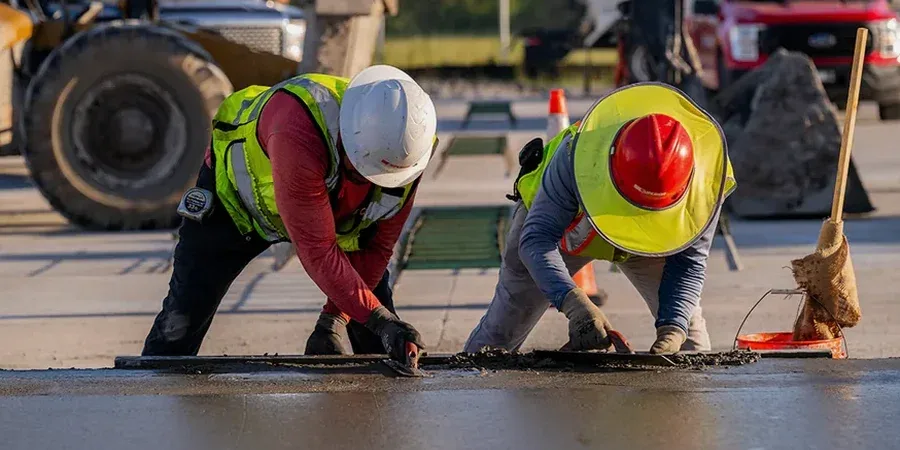
The range of projects requiring this expertise is vast. It extends from the site investigation and earthworks specification for major new link roads and housing estate distributor routes to the forensic analysis of existing carriageway failures on busy corridors like the A4 Portway or the A38. Our work is critical in designing robust foundations for rigid pavement design, where the stiffness of the concrete slab is directly dependent on a uniform and stable support system to prevent pumping and cracking at joints. We also provide detailed assessments for the construction of haul roads for major developments, the stabilisation of slopes adjacent to highways in areas like Totterdown, and the design of reinforced soil structures for bridge abutments and widened embankments.
Available services
Common questions
What is the primary purpose of a geotechnical investigation for a new road in Bristol?
The primary purpose is to characterise the underlying ground conditions—including the strength, compressibility, and chemistry of soils like the local Mercia Mudstone or alluvial clays—to design a stable pavement foundation. This investigation directly informs the thickness of capping and sub-base layers, prevents differential settlement, and identifies risks such as sulphate attack on concrete, ensuring the road's long-term durability in accordance with the DMRB.
Which UK standards govern the design of road pavement foundations?
The design is principally governed by the Design Manual for Roads and Bridges (DMRB), specifically CD 225 and CD 224. These are complemented by the Manual of Contract Documents for Highway Works (MCHW) Series 600 and 800, and the overarching geotechnical principles of Eurocode 7 (BS EN 1997). These standards ensure a consistent and safe approach to bearing capacity, settlement, and material specification across Bristol's highway projects.
How do Bristol's local ground conditions influence road construction?
Bristol's varied geology, from hard Carboniferous Limestone to soft estuarine alluvial clays, creates a high risk of differential settlement at geological boundaries. The widespread Mercia Mudstone can be weak and susceptible to weathering, while the low-lying alluvium is highly compressible. These conditions dictate extensive ground improvement, soil stabilisation, or deeper foundations to create a uniform platform and prevent surface deformation.
What are the signs of geotechnical failure in an existing road?
Key indicators include longitudinal cracking along the wheel paths, extensive alligator cracking, deep rutting, and abrupt steps or bumps at transitions between cuts and fills. These symptoms often point to a failure in the pavement foundation, such as inadequate bearing capacity in a soft clay subgrade, poor drainage leading to a loss of support, or differential settlement over variable ground conditions beneath the road.