Seismic engineering in Bristol addresses the assessment and mitigation of earthquake risks for structures and infrastructure, despite the UK's relatively low seismicity. While the city is not located near active plate boundaries, the region experiences occasional tremors—most notably the 2008 Market Rasen earthquake, which was felt across Bristol. This category encompasses a range of specialised services designed to evaluate ground response, enhance structural resilience, and inform safe urban planning. For a city with a rich historic fabric and ongoing regeneration, integrating seismic considerations into both new developments and retrofitting projects is essential to protect life, property, and heritage.
Bristol's underlying geology plays a critical role in shaping local seismic hazard. Much of the city centre and key development zones are underlain by soft alluvial deposits and estuarine clays associated with the River Avon and its tributaries. These unconsolidated soils are susceptible to ground amplification during seismic events, which can significantly increase shaking intensity compared to rock sites. In certain saturated granular layers, there is also potential for cyclic mobility, making a thorough soil liquefaction analysis a vital component of many ground investigations. The complex transition between the Carboniferous Limestone of the Avon Gorge and the softer Triassic Mercia Mudstone across the city further complicates site response, demanding site-specific assessments rather than generic assumptions.
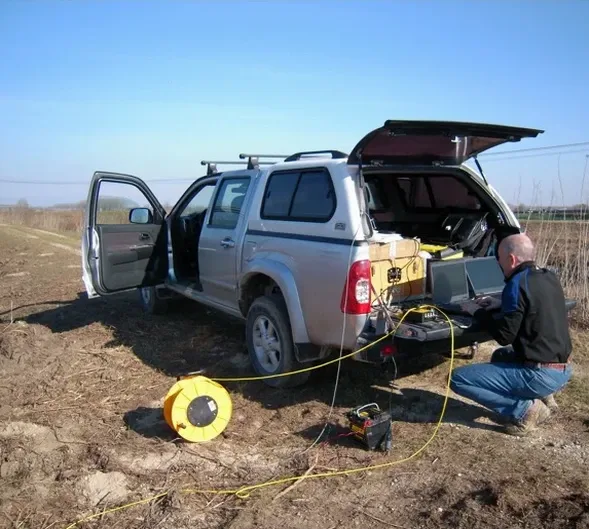
The regulatory framework for seismic design in the UK is governed by the British Standards Institution's BS EN 1998-1:2004 (Eurocode 8), which is adopted as the UK National Annex. This standard classifies the UK as a low-seismicity region but still requires seismic checks for important structures. The UK National Annex provides the reference peak ground acceleration (PGA) values for Bristol, typically on bedrock, which must be modified based on ground conditions as defined in BS 5930. For critical infrastructure, tall buildings, and projects involving public safety, compliance with these codes is mandatory. A seismic microzonation study can refine these generic code values by mapping variations in ground response across a specific site or district, offering a more precise basis for design.
Projects that typically require seismic engineering input in Bristol range from high-rise residential towers and commercial offices to bridges, hospitals, and educational facilities. The city's push for brownfield regeneration often involves constructing on challenging ground, where a detailed seismic ground model is crucial. For structures housing sensitive equipment or functions that must remain operational after an earthquake, performance-based design becomes critical. In such cases, advanced techniques like base isolation seismic design can be employed to decouple a building from ground motion, drastically reducing the forces transmitted into the superstructure and protecting both structural integrity and internal contents.
Common questions
Is Bristol at risk from earthquakes?
Yes, although the UK is a low-seismicity region, Bristol does experience occasional tremors. The most notable recent event was the 2008 Market Rasen earthquake, felt across the city. The risk is not from large-magnitude events but from the potential amplification of moderate shaking by local soft soils, which makes seismic assessment important for certain structures.
What regulations govern seismic design in Bristol?
Seismic design in Bristol must comply with BS EN 1998-1:2004 (Eurocode 8) and its UK National Annex. This standard provides the seismic hazard parameters, including the reference peak ground acceleration for the region. The UK National Annex adapts the Eurocode to local conditions, classifying the UK as a very low to low seismicity zone, but still requiring checks for important structures.
Why is soil liquefaction a concern in some parts of Bristol?
Liquefaction is a concern in areas underlain by loose, saturated granular soils, such as those found along the River Avon floodplain and in the Floating Harbour district. During earthquake shaking, these soils can lose strength and behave like a liquid, causing ground failure. This poses a risk to foundations, buried utilities, and quay walls, making analysis essential for developments on these deposits.
What types of buildings in Bristol require a seismic assessment?
While most conventional low-rise residential buildings do not require a full seismic assessment, it is mandatory for structures in consequence class CC2b and above, including schools, hospitals, tall buildings, major bridges, and critical infrastructure. Any project where public safety is paramount or where post-earthquake functionality is required should undergo a detailed seismic evaluation.