Ground improvement encompasses a suite of geotechnical techniques designed to enhance the engineering properties of soil and fill materials, enabling safe and cost-effective construction. In Bristol, this discipline is not merely an option but a necessity for many projects, given the city's complex and often challenging ground conditions. From the historic harbour areas to the expanding residential zones, the ability to modify weak or variable ground underpins the viability of new infrastructure, commercial developments, and housing. The core objective is to increase bearing capacity, reduce total and differential settlement, mitigate liquefaction potential, and improve slope stability, effectively tailoring the ground to meet the specific demands of a structure.
Bristol's geological setting is a key driver for the widespread need for ground improvement. The city is underlain by a varied sequence of Triassic and Carboniferous strata, including the Mercia Mudstone Group and the Pennant Sandstone Formation, but these are often masked by significant superficial deposits. Of particular note are the thick alluvial clays, silts, and peats along the River Avon and its tributaries, as well as extensive areas of made ground, especially in the Floating Harbour and Temple Quarter districts, where centuries of industrial activity have left a legacy of undocumented fill. These soft, compressible, and heterogeneous soils are frequently incapable of supporting conventional shallow foundations without significant treatment, making a detailed understanding of the local geology critical for any site-specific vibrocompaction design or alternative method.
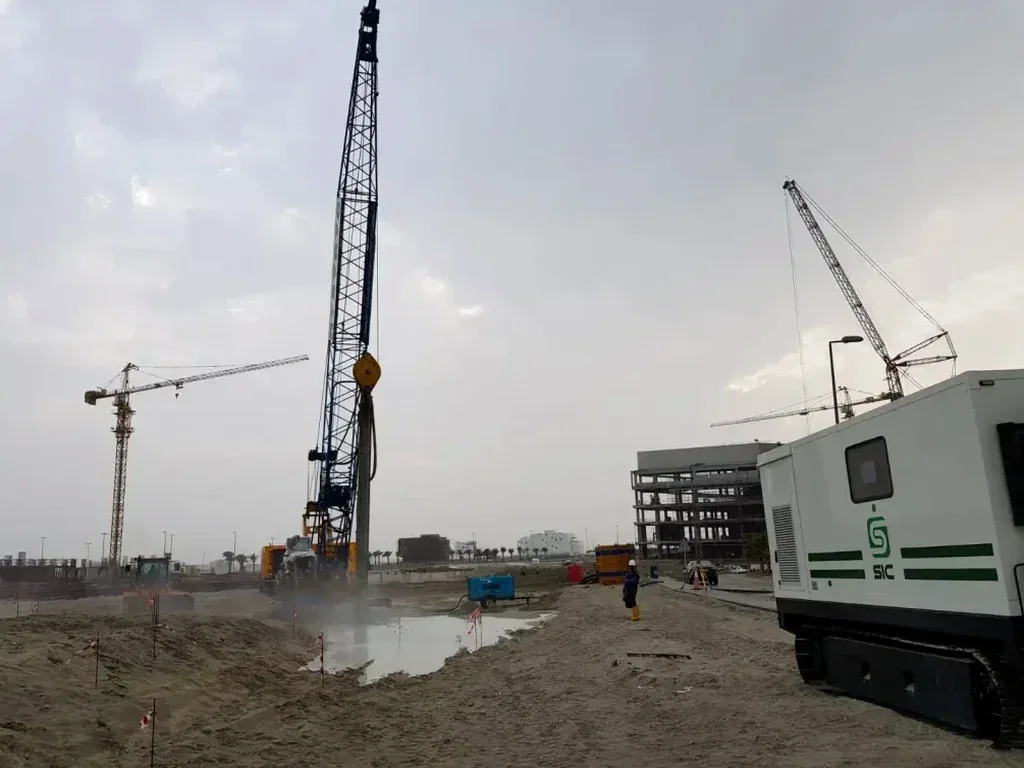
The application of ground improvement in the UK is governed by a robust framework of standards, with the keystone being BS EN 1997-1:2004+A1:2013 (Eurocode 7: Geotechnical design – General rules) and its UK National Annex. This is complemented by BS EN 1998-5:2004 for seismic design, and the execution standard BS EN 14731:2005, which specifically covers deep vibration techniques. A thorough ground investigation to BS EN 1997-2, interpreted by a qualified geotechnical engineer, is a non-negotiable prerequisite. The design must rigorously demonstrate that both ultimate and serviceability limit states are satisfied, with an observational method often employed to verify performance during execution, ensuring the treated ground meets the stringent assumptions made during the design phase.
The types of projects in Bristol that routinely require ground improvement are diverse. Large-scale brownfield regeneration, such as the transformation of former industrial docks into mixed-use developments, frequently demands deep vibratory methods like vibrocompaction design to densify loose granular fills and improve drainage. Infrastructure projects, including road embankments over soft alluvial floodplains and the construction of sustainable urban drainage systems (SuDS), rely on techniques to enhance stability and control settlement. Even smaller residential schemes on challenging plots can benefit from targeted solutions like rapid impact compaction or dynamic replacement, avoiding the high cost and carbon footprint of deep piled foundations. The selection of the most appropriate technique is a complex decision, balancing geotechnical performance, programme constraints, environmental impact, and the sensitivity of adjacent structures.
Available services
Common questions
What is the main purpose of ground improvement and when is it necessary?
The primary purpose is to permanently enhance the physical properties of a soil mass, typically to increase bearing capacity, reduce settlement, and mitigate liquefaction risk. It becomes necessary when the in-situ ground is too weak or compressible to support the proposed load from a structure or embankment, making conventional shallow foundations inadequate without treatment.
How do Bristol's local ground conditions influence the choice of technique?
Bristol's prevalent conditions—deep alluvial clays, peats, and loose, undocumented made ground—directly dictate the suitability of methods. For instance, loose granular fills are ideal for vibrocompaction, whereas soft cohesive soils may require stone columns or deep soil mixing. A thorough site investigation is the sole means of characterising these deposits and selecting a technically and commercially viable technique.
What are the key British Standards that govern ground improvement design?
The design is primarily governed by BS EN 1997-1 (Eurocode 7) and its UK National Annex, which establish the principles for geotechnical design by calculation, prescriptive measures, and load testing. Execution is covered by BS EN 14731 for deep vibration techniques. Compliance with these standards, along with a robust ground investigation to BS EN 1997-2, is mandatory to satisfy building regulations and ensure a safe design.
What are the general advantages of ground improvement over traditional piling?
Ground improvement techniques often provide significant sustainability and programme benefits. By treating the soil in-situ, they eliminate the need for importing large quantities of fill or concrete and the off-site disposal of spoil. This can lead to a lower carbon footprint, reduced lorry movements to site, and can frequently be more cost-effective and faster than a deep piled solution, especially for treating large areas.