Bristol’s geology shifts dramatically within a few hundred metres. One site might sit on the competent Carboniferous limestone of the Clifton Down, while another, closer to the Floating Harbour, is dealing with soft alluvial clays from the historic Avon floodplain. That contrast makes a soil mechanics study essential before any foundation design. The tidal range here, the second highest in the world at nearly 15 metres at Avonmouth, influences groundwater behaviour in ways that catch out generic desk studies. Our approach quantifies the actual strength, compressibility and drainage characteristics of the ground, not just the assumed ones from a geological map. We run laboratory testing on undisturbed samples and correlate field data so the design parameters reflect what is really under the site.
Bristol's tidal range drives groundwater fluctuations that can alter effective stress by over 100 kPa between low and high tide.
How we work
Local ground factors
BS EN 1997-1:2004 (Eurocode 7) requires that ground investigation be sufficient to establish the geotechnical model with confidence. In Bristol, skipping a thorough soil mechanics study introduces two distinct risks. First, in the alluvial corridors of the Avon and Frome, underestimating secondary consolidation can lead to long-term settlement that cracks masonry and services. Second, on the limestone plateau, assuming rockhead depth from nearby boreholes is dangerous: the karstic nature of the Clifton Down limestone means deep, clay-filled fissures can exist where a rotary borehole registered competent rock just five metres away. The investigation must be dense enough to catch these features. Our reports include a discussion of ground model uncertainty and a risk register aligned with CDM 2015 duties, so the design team can make informed decisions about foundation type, ground improvement or load reduction.
Relevant standards
BS 5930:2015 – Code of practice for ground investigations, BS EN 1997-1:2004 – Eurocode 7: Geotechnical design – General rules, BRE Special Digest 1 – Concrete in aggressive ground
Related services
Laboratory testing programme
Classification tests (PSD, Atterberg), strength tests (triaxial UU/CIU, unconfined compression) and compressibility tests (oedometer) on samples recovered from boreholes and trial pits across the Bristol area.
Field investigation and sampling
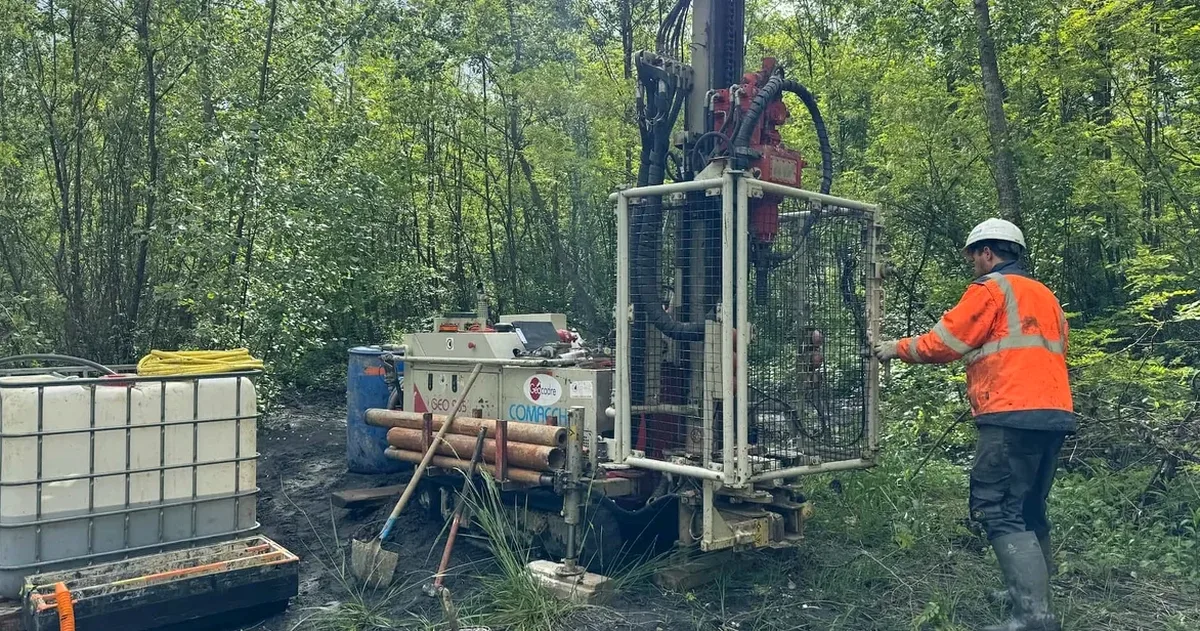
Cable percussion and rotary drilling, dynamic probing and trial pitting to recover disturbed and undisturbed samples, with in-situ SPT and permeability testing where the ground model requires it.
Geotechnical interpretive report
A full Ground Investigation Report with site geology, ground model, derived parameters, foundation recommendations and a CDM risk register, signed by a Chartered Geotechnical Engineer.
Typical parameters
Common questions
How much does a soil mechanics study cost for a typical Bristol house extension?
For a domestic extension or small infill plot in Bristol, a soil mechanics study with a trial pit, sampling and laboratory testing typically falls between £2,240 and £4,460, depending on access and the number of tests required. A site in a conservation area like Clifton with restricted access will be at the higher end.
What's the difference between a soil mechanics study and a simple soil report?
A simple soil report might just log what was seen in a trial pit. A soil mechanics study quantifies the actual engineering properties: strength, compressibility, permeability. It involves laboratory testing and interpreted design parameters, not just descriptions. For anything that needs building control approval or structural design in Bristol, the latter is what is required under BS 5930.
Do you need to test for aggressive ground in Bristol?
Yes, particularly in Avonmouth, Hotwells and near the Floating Harbour. Estuarine alluvium and made ground can contain high sulphates and low pH. We run BRE SD1 suites (pH, water-soluble sulphate, magnesium) to specify the correct Design Sulphate Class and ACEC class for buried concrete.
How long does the lab testing take once samples are taken?
Classification tests (PSD, Atterberg) can be reported within 5 working days. Strength and compressibility tests like triaxial or oedometer need 10–15 working days because of the consolidation and shearing stages. We schedule the programme so critical parameters are available for the design team's programme.